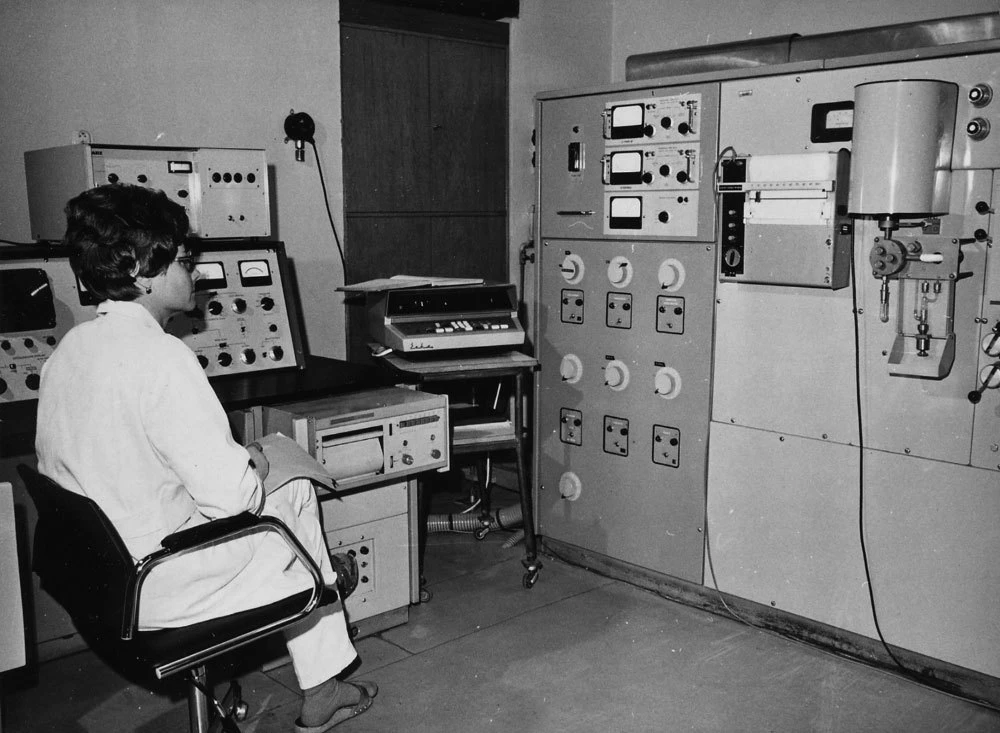
The core facility Mass Spectrometry provides services towards the characterization and structure elucidation of organic molecules. It offers knowledge, experience, and instrumentation for collaboration on projects for which mass spectrometry might be useful.
Services
- Mass spectra of molecules
- Quantitative analysis of small molecules
- Metabolomics
- Lipidomics
- Mass spectrometry imaging
- On-demand mass spectrometry
- Quality check of solvents
- Open access GC/MS and LC/MS
GAČR: Ultraviolet Photodissociation Mass Spectrometry for Advanced Structural Analysis of Lipids
Advances in lipid science have deepened our understanding of lipid functions across biological systems. Mass spectrometry (MS) plays a central role in lipid analysis, offering high sensitivity for identification and quantification. Tandem MS with collision-induced dissociation (CID) is widely used for structural analysis, but often fails to resolve critical features, especially in isomeric lipids. To address these limitations, alternative methods such as UV photodissociation (UVPD) are increasingly used. UVPD accesses distinct fragmentation pathways, opening new avenues for structural analysis, though its underlying mechanisms remain only partially understood. In our recent study, we observed photofragmentation of lithium-cationized wax esters, and proposed a mechanism involving Norrish–Yang-type photochemistry. This project will investigate the photofragmentation in detail, combining experimental and theoretical approaches. We will target lipid classes where CID is inadequate, aiming to show that UVPD- driven fragmentation enables structural insights beyond those offered by CID.
GAUK: Use of molecular sieves for the separation of branched lipids
This project is focused on using molecular sieves for the preconcentration of lipids with branched aliphatic chains. These lipids play significant biological roles and are involved in various serious diseases. However, their analysis is complicated by the low concentrations in biological samples, where they are often overshadowed by more abundant lipids with straight aliphatic chains and can easily evade detection. We propose utilizing molecular sieves to selectively remove predominant straight-chain lipids from lipid extracts, leaving only branched-chain lipids, which can then be readily analyzed using HPLC/MS2 or GC/MS. This innovative approach to branched lipid analysis, if successful, could significantly advance the capabilities of lipidomic analysis. Molecular sieves are widely used for hydrocarbon separation in the petrochemical industry, and our preliminary data suggest they can also be applied on a microscale for analytical hydrocarbon separations. The selective separation of functionalized lipids, such as fatty acid methyl esters (FAME), by molecular sieves has not yet been documented. In this project, we will first develop a robust method for separating hydrocarbons, which could be applied to, for example, cuticular hydrocarbons of social insects. We will then focus on the separation of branched and straight-chain FAME, verifying the approach using a complex sample obtained from the transesterification of total lipid extracts from vernix caseosa.